Why Aqua Fitness Feels Better on Bad Knees Than Any Land Workout — and How to Get Started
Quick Answer: Water at chest depth removes about 75% of your body weight from your joints, which is why aqua fitness lets people with knee pain move through ranges that hurt on land. Start in shallow water with wall-supported moves before progressing to deep water.
Your knees ache walking up stairs, but somehow a squat feels fine in the pool. That’s not in your head — it’s buoyancy doing real, measurable work.

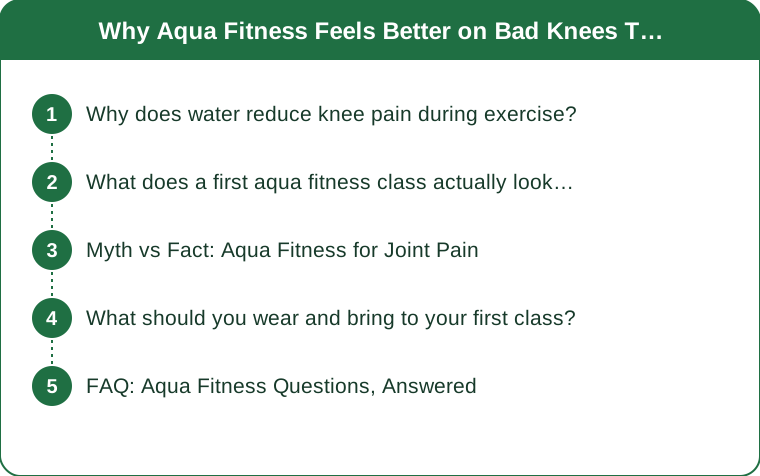
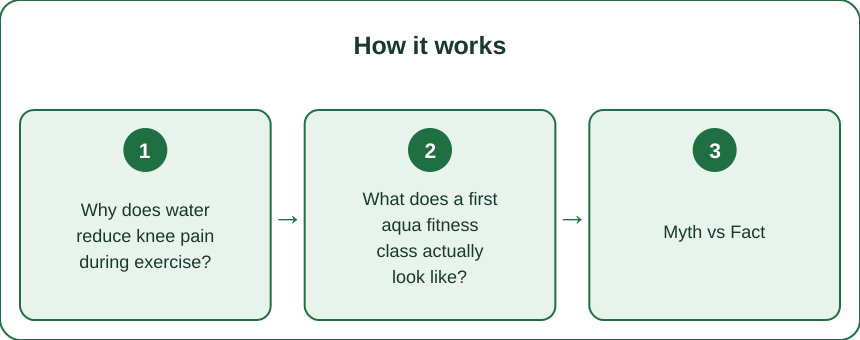
Why does water reduce knee pain during exercise?
Buoyancy is the mechanism: standing in water at chest height removes roughly 75% of your body weight from your lower joints, and at waist height it’s closer to 50%. Less load through the knee means less compressive force with every step or squat.
Water also provides resistance in every direction, so muscles around the knee still work — you get strengthening without the impact that aggravates an already irritated joint.
What does a first aqua fitness class actually look like?
Most beginner classes start with wall-supported moves: holding the pool edge for leg lifts, gentle marching in place, and side steps in shallow water where you can stand comfortably.
A typical 45-minute class breaks down as roughly 10 minutes warm-up marching, 20 minutes standing strength moves, 10 minutes core work using a noodle for support, 5 minutes cooldown stretching — all adjustable to your own pace since the water itself limits how fast you can move.

Myth vs Fact: Aqua Fitness for Joint Pain
Myth: Aqua fitness is only for older adults or rehab patients. Fact: Classes range from gentle rehab-style sessions to genuinely challenging cardio and strength formats — the water adjusts to your effort level, not the other way around.
Myth: You need to know how to swim. Fact: Most aqua fitness happens in chest-to-shoulder depth water where you can stand the whole time; swimming ability isn’t required.
Myth: It’s not a real workout if it doesn’t hurt after. Fact: Water’s resistance works muscles in every direction of movement (not just against gravity), so effective classes build real strength — soreness just shows up differently than land training.
What should you wear and bring to your first class?
A well-fitting one-piece or athletic swimsuit that won’t shift during movement, water shoes for pool-floor traction and to protect feet from rough surfaces, and a towel. Some people prefer a rash guard for chlorine-sensitive skin.
Arrive 10 minutes early for your first class — most instructors will happily walk you through modifications for knee-specific limitations before the group session starts.
FAQ: Aqua Fitness Questions, Answered
How often should I do aqua fitness for knee pain relief?
Most people notice benefit starting at 2-3 sessions per week, consistent for at least 4-6 weeks before expecting a clear pattern of less daily discomfort.
Can aqua fitness replace physical therapy for a knee injury?
No — it can complement PT-prescribed exercises well, but a diagnosed injury should follow your provider’s specific plan first.
Will chlorine bother sensitive skin?
Some people notice dryness; rinsing off promptly after class and moisturizing helps most cases. This is general information, not medical advice.
TL;DR:
- Chest-deep water removes ~75% of body weight from joints — that’s why squats feel fine there
- First classes are wall-supported and adjustable to your pace, no swimming needed
- Water resistance builds real strength even without post-workout soreness
- Give it 4-6 weeks of 2-3 sessions before judging the knee-pain impact
Show up to one beginner class before deciding — most of the intimidation disappears in the first 10 minutes.
Keep Reading
This article is for general informational purposes only and is not medical advice. Always consult a qualified health professional for guidance specific to you.