Why Your Aqua Fitness Routine Stopped Working (And the Water Depth Fix)
Quick Answer: Aqua fitness plateaus almost always trace back to water depth being wrong for the goal, resistance never increasing, or the same class format repeated for months. Adjusting depth and adding resistance tools typically restarts progress within 2-3 weeks.
You’ve been going to the same aqua class twice a week for months. It used to leave you exhausted; now you barely break a sweat. That’s not your body adapting in a bad way — it’s a sign the water isn’t challenging you the way it did on day one.

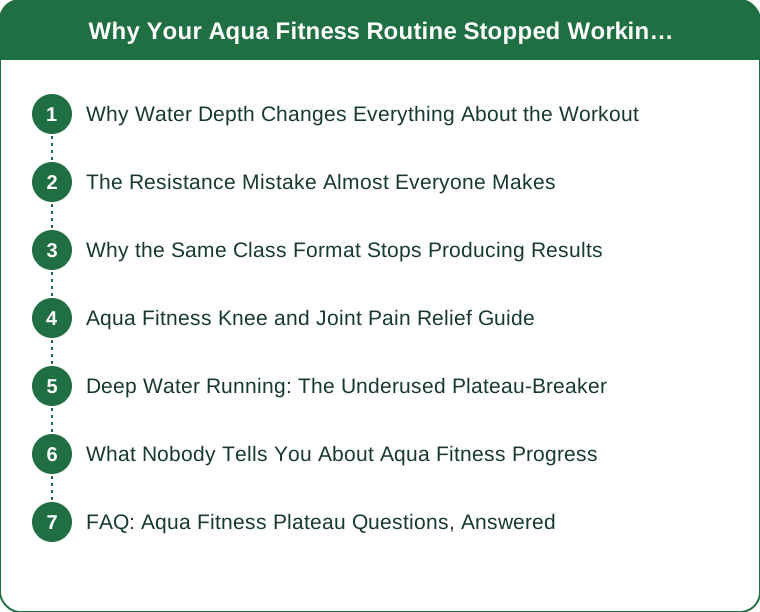
Why Water Depth Changes Everything About the Workout
Water depth fundamentally changes how much resistance and buoyancy support you’re getting, and most people never adjust it as they get fitter. At waist depth, you’re carrying more of your own body weight, which is good for balance and joint-friendly strength work but limits cardio intensity. At chest depth, buoyancy removes most of your body weight, which is ideal for higher-intensity cardio intervals but reduces the ground-reaction strength component.
The common mistake: staying in the same depth for every single session regardless of the day’s goal. If your workouts have plateaued, the fix often isn’t more effort — it’s deliberately alternating depths. Waist-depth days for strength and stability, chest-depth days for cardio intervals, gives your body two distinct stimuli instead of one repeated one.
Water temperature interacts with this too — pools kept warmer for accessibility (around 84-86°F) feel gentler, which is great for joint-friendly work but means you’ll need to work noticeably harder or move to a cooler lap pool to get real cardiovascular intensity.
The Resistance Mistake Almost Everyone Makes
Water itself provides resistance, but that resistance is fixed relative to your movement speed — meaning if you move at the same pace every session, you’re getting the same resistance every session, indefinitely. This is the single biggest reason aqua fitness results plateau: there’s no progressive overload happening.
The fix is adding resistance equipment: webbed gloves, foam dumbbells, or ankle buoys increase the surface area moving through water, which meaningfully increases the resistance without needing to move faster or risk joint strain. Pool noodles used for resisted leg work function the same way.
A simple progression that works well: weeks 1-4 with bare hands and feet, weeks 5-8 adding webbed gloves, weeks 9-12 adding ankle buoys for leg work. Each stage should feel noticeably harder than the last — if it doesn’t, that’s the cue to add the next tool rather than waiting longer.
Why the Same Class Format Stops Producing Results
Group aqua classes are often taught to a fixed format for consistency’s sake — same warmup, same core set, same cooldown, week after week. That consistency is great for adherence but terrible for continued adaptation, because your body has fully adapted to that specific sequence of movements after roughly 6-8 weeks.
If you’re in a fixed-format class and progress has stalled, the fix isn’t necessarily leaving the class — it’s supplementing. Adding one independent session a week focused on intervals (30 seconds hard effort, 30 seconds easy, repeated 10-15 times) introduces a stimulus the class format doesn’t provide.
Interval-based aqua work in particular tends to produce results the steady-pace class format doesn’t, because the hard efforts push heart rate meaningfully higher than a moderate, sustained class pace typically reaches.

Aqua Fitness Knee and Joint Pain Relief Guide
For those specifically doing aqua fitness for joint relief rather than intensity, depth matters just as much but in a different direction. Staying closer to chest depth removes more load from the knees and hips, which is why it’s the standard recommendation for arthritis-friendly aqua programs.
The plateau risk here is different: if joint pain has genuinely improved, some cautious reintroduction of waist-depth work (with its slightly higher joint loading) can help rebuild the bone and connective tissue strength that non-weight-bearing chest-depth work doesn’t fully address. This should be gradual and guided by how the joints respond, not rushed.
Water walking specifically — brisk walking at chest depth — remains one of the most joint-friendly cardio options available and is worth keeping as a staple even as other elements of the routine get adjusted for progress.
Deep Water Running: The Underused Plateau-Breaker
Deep water running, done in the deep end with a flotation belt so feet never touch bottom, is one of the most underused tools for breaking an aqua fitness plateau. Without ground contact, the movement pattern and muscle recruitment differ meaningfully from standard shallow-water aqua work.
Because there’s no impact and no ground-reaction assistance, deep water running demands more from the hip flexors and core to maintain form, which is exactly the kind of new stimulus a stalled routine needs. Even 15-20 minutes, once or twice a week, added to an existing routine tends to produce a noticeable difference within a few weeks.
The learning curve is real — most people find deep water running awkward for the first few sessions before the technique clicks. Sticking with it past that adjustment period is usually where the payoff shows up.
What Nobody Tells You About Aqua Fitness Progress
Aqua fitness doesn’t produce visible sweat the way land-based cardio does, which leads many people to underestimate how hard they’re actually working — or to assume a session ‘didn’t count’ because they didn’t feel drenched afterward. Water dissipates heat far more efficiently than air, so the absence of visible sweat isn’t a reliable intensity marker.
A better gauge is perceived exertion or, if available, a waterproof heart rate monitor — many people are training at a genuinely effective intensity in the pool while feeling like they ‘barely did anything,’ simply because the usual cues (sweat, flushed skin, heavy breathing that echoes in open air) are muted by the water environment.
This matters for plateau-breaking specifically: don’t judge whether a new depth, resistance tool, or interval structure is working by how sweaty you felt. Judge it by whether your muscles feel worked the next day, or whether your heart rate monitor shows a genuine increase.
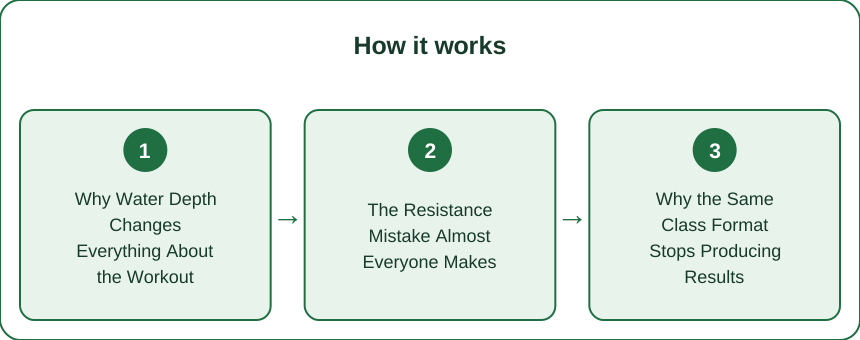
FAQ: Aqua Fitness Plateau Questions, Answered
How long does it take to see results after changing depth or adding resistance tools?
Most people notice a difference in perceived effort within 1-2 sessions and measurable fitness changes within 3-4 weeks, similar to the adaptation timeline for land-based training changes.
Is deep water running actually as effective as regular running for fitness?
Studies comparing deep water running to treadmill running have found comparable cardiovascular benefits, with the advantage of zero impact — the main difference is a steeper initial learning curve for technique.
Do I need special equipment to break an aqua fitness plateau, or can depth changes alone do it?
Depth changes alone can meaningfully shift the stimulus and are free, but combining them with basic resistance tools (webbed gloves, ankle buoys) tends to produce faster and more noticeable results than depth changes alone.
TL;DR:
- Alternate water depth deliberately — waist depth for strength, chest depth for cardio — instead of staying in one depth every session
- Add resistance tools (webbed gloves, ankle buoys) every 4 weeks to keep progressive overload going
- Supplement a fixed class format with one independent interval session weekly
- Deep water running is an underused plateau-breaker with real cardiovascular payoff
- Don’t judge intensity by sweat — water masks the usual cues, so trust perceived effort or a heart rate monitor instead
Most aqua fitness plateaus are a stimulus problem, not an effort problem — change what the water is asking your body to do, and progress tends to restart within a few weeks.
Keep Reading
This article is for general informational purposes only and is not medical advice. Always consult a qualified health professional for guidance specific to you.