The Pool Depth Guide That Explains Why Your Water Workout Feels Inconsistent
Quick Answer: Water depth changes both resistance and joint-loading dramatically — waist-deep water offers less resistance but more joint impact, while chest-to-shoulder-deep water maximizes resistance training benefit while minimizing impact, which is why the same workout feels completely different depending on depth.
One week your aqua class feels like a serious workout, the next it barely raises your heart rate — and it’s not always about effort. Depth changes the physics of the entire session more than most people realize.

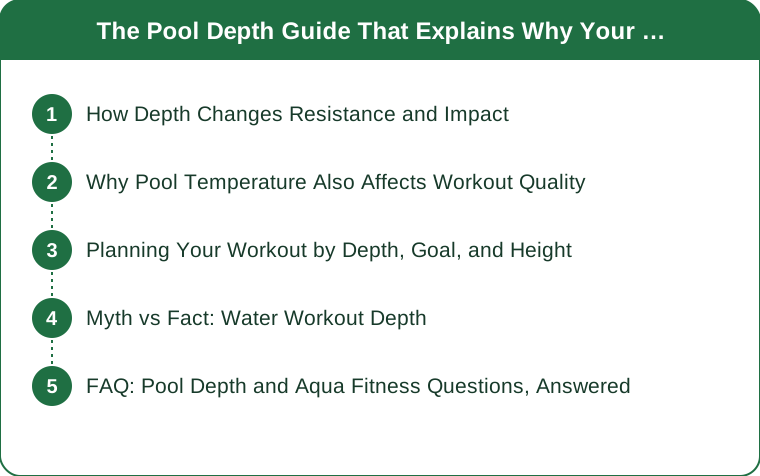
How Depth Changes Resistance and Impact
Why Depth Changes Resistance So Much
Water resistance comes from displacing water as you move a limb through it, and the deeper a limb is submerged, the more total resistance surface area it encounters through a full range of motion. A kick that’s mostly underwater at chest-deep water meets far more resistance than the same kick partially out of the water at waist-deep.
Waist-Deep Water: Lower Resistance, More Impact
At waist depth, your upper body and a good portion of your legs stay above water, meaning buoyancy supports less of your body weight — your joints absorb more impact with each step or jump compared to deeper water. This depth works better for balance-focused or lower-intensity sessions than for joint-protective cardio.
Chest-to-Shoulder Depth: The Buoyancy Sweet Spot
At this depth, buoyancy typically supports around 75-80% of body weight, dramatically reducing joint impact while fully submerging limbs for maximum resistance during movement. This is generally considered the ideal depth range for both joint-friendly and genuinely challenging aqua workouts — most structured aqua fitness classes are designed around this range specifically.
Why Pool Temperature Also Affects Workout Quality
Pools kept warmer (above 84°F) for comfort and therapy purposes reduce the body’s need to generate heat, which can make cardiovascular effort feel easier at the same actual intensity — meaning a warm-pool class may under-deliver on cardio benefit compared to a cooler pool at identical movement intensity. Cooler pools (78-82°F) tend to support higher-intensity aqua cardio better.

Planning Your Workout by Depth, Goal, and Height
Depth-Based Workout Planning by Goal
For joint rehabilitation or very low-impact needs, waist-to-navel depth with slow, controlled movement is often appropriate. For cardio and strength combined, chest-to-shoulder depth with faster movement maximizes the resistance benefit. For pure buoyancy-based stretching or gentle mobility, deep water with a flotation belt removes impact almost entirely.
Why Your Own Height Matters More Than the Pool’s Marked Depth
A pool marked ‘4 feet’ is chest-deep for someone 5’2” and waist-deep for someone 5’10” — the same class, same pool, delivers a meaningfully different workout depending on your height relative to the water level. This is worth accounting for when comparing your experience to a class-mate’s or a workout video’s stated depth recommendation.
Common Depth Mistakes That Undercut Results
Standing in water too shallow for the exercise (common when people gravitate to the pool’s edge steps out of comfort) is the most frequent mistake, quietly turning a resistance workout into a much lower-effort session. Another common issue is not adjusting arm movement height to stay submerged, letting arms work in air where there’s far less resistance than intended.
Myth vs Fact: Water Workout Depth
Myth: Deeper water is always a harder workout. Fact: past a certain depth (deep enough that feet leave the ground and buoyancy dominates), resistance training benefit can actually decrease unless you add a flotation aid and different technique.
Myth: Any pool depth works equally well for any goal. Fact: depth should match your specific goal — rehab, cardio, and strength each have a different ideal range, and using the wrong one for your goal limits results.
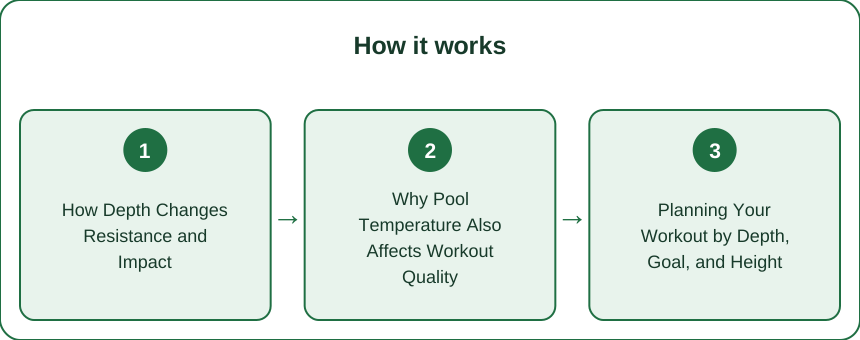
FAQ: Pool Depth and Aqua Fitness Questions, Answered
What depth is best for beginners?
Chest-deep water is generally the safest starting point — enough buoyancy to protect joints, enough resistance to feel like real exercise, and stable footing throughout.
Does depth affect calorie burn?
Yes — deeper water generally increases calorie burn for the same movement due to greater resistance, up to the point where feet leave the pool floor and movement patterns change.
Should I switch depths within one workout?
Many effective aqua workouts do intentionally vary depth — shallower for balance work, deeper for resistance intervals — as long as the transitions are planned rather than random.
TL;DR:
- Deeper water (chest-to-shoulder) generally means more resistance and less joint impact
- Waist-deep water means less resistance but more impact on joints
- Pool temperature also affects how hard a session actually feels vs. its real intensity
- Your own height changes what a ‘marked depth’ actually means for your body
- Match depth to your goal: rehab, cardio, or strength each has a different ideal range
Inconsistent results from pool workouts are rarely about inconsistent effort — check the depth and temperature first, since both quietly change the workout more than technique does.
Keep Reading
This article is for general informational purposes only and is not medical advice. Always consult a qualified health professional for guidance specific to you.